This website uses cookies
This website uses cookies. For further information on how we use cookies you can read our Privacy and Cookie notice

This website uses cookies. For further information on how we use cookies you can read our Privacy and Cookie notice
/product/01/5103523/1.jpg?4211)
In stock

Easy Return, Quick Refund.Details
QABETE ENTERPRISES
92%Seller Score
75 Followers
Shipping speed: Excellent
Quality Score: Excellent
Customer Rating: Average


By David Allen
"Getting Things Done" (GTD), first published in 2001 by productivity consultant David Allen, is a widely influential self-management book that introduces a highly actionable workflow method for organizing tasks, reducing stress, and increasing personal effectiveness. The book’s central message is that by getting tasks, ideas, and commitments out of your head and into a trusted system, you free up mental space to focus and engage meaningfully with your work and life123.
David Allen’s method revolves around five integrated steps, collectively forming a system that manages the flow of daily tasks, priorities, and projects:
Capture
Gather everything that demands your attention—tasks, ideas, emails, commitments—into external “inboxes,” whether digital or physical.
Clarify
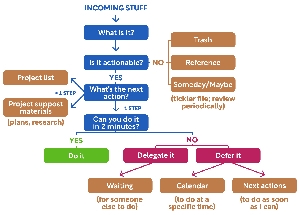
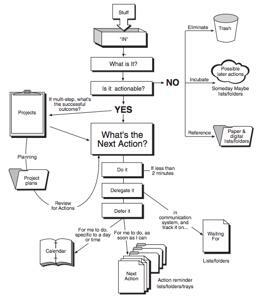
Process captured items to determine if they are actionable. Decide what the required outcome is, and specify the next concrete action if there is one. If an item takes less than two minutes to complete, do it immediately (the “2-minute rule”)45.
Organize
Sort actionable items into appropriate lists or categories (e.g., Next Actions, Projects, Waiting For, Calendar, or Someday/Maybe). Assign tasks to contexts, people, or dates as needed23.
Reflect/Review
Regularly review and update your lists (at least weekly) to keep your system current. The review keeps your “open loops” visible and under control15.
Engage
Use your system to choose what to focus on and take action, guided by context, available time and energy, and priority26.
Externalize Everything: Write down or record all tasks and ideas instead of letting them clutter your mind.
Lists: Use lists such as Next Actions, Projects, Waiting For (delegated tasks), Calendar, and Someday/Maybe to segment and prioritize tasks6.
Trusted System: Use any tool (digital or analog) that you consistently check—Allen is agnostic about platforms but stresses the importance of reliability and regular review2.
Weekly Review: This is the backbone of the system, ensuring you keep on top of your commitments and prevent overwhelm by updating your projects and next actions5.
The Tickler File: A physical or digital reminder system for future tasks that need action or revisiting on specific days.
Stress-Free Productivity: GTD aims to help you achieve “a mind like water,” where you can respond appropriately and calmly to any demand, because nothing is forgotten or nagging unattended in the background15.
Clear Focus: By defining desired outcomes and next actions for every commitment, ambiguity and procrastination are minimized13.
Universal Adaptability: The method has found success with business leaders, creatives, and individuals alike, and can be used with both simple paper tools and advanced productivity apps26.
The book’s examples often target knowledge workers and professionals; some readers find the corporate perspective less relatable.
GTD is less prescriptive for creative project breakdowns or tasks that are highly ambiguous, but it excels at clearing mental clutter so creative thinkers can focus74.
| Attribute | Details |
|---|---|
| Author | David Allen |
| First Published | 2001 (updated in 2015) |
| Method Key Steps | Capture, Clarify, Organize, Reflect, Engage |
| Popular Practices | 2-Minute Rule, Weekly Review, Context Lists |
| Audience | Professionals, knowledge workers, anyone feeling overwhelmed |
| Unique Aspect | Focuses on external systems to achieve stress-free action |
David Allen’s "Getting Things Done" remains a cornerstone of modern productivity, offering a clear framework for managing everything life throws at you. It encourages a stress-free, organized workflow, empowering readers to regain control, focus, and peace of mind12356.


By David Allen
"Getting Things Done" (GTD), first published in 2001 by productivity consultant David Allen, is a widely influential self-management book that introduces a highly actionable workflow method for organizing tasks, reducing stress, and increasing personal effectiveness. The book’s central message is that by getting tasks, ideas, and commitments out of your head and into a trusted system, you free up mental space to focus and engage meaningfully with your work and life123.
David Allen’s method revolves around five integrated steps, collectively forming a system that manages the flow of daily tasks, priorities, and projects:
Capture
Gather everything that demands your attention—tasks, ideas, emails, commitments—into external “inboxes,” whether digital or physical.
Clarify
Process captured items to determine if they are actionable. Decide what the required outcome is, and specify the next concrete action if there is one. If an item takes less than two minutes to complete, do it immediately (the “2-minute rule”)45.
Organize
Sort actionable items into appropriate lists or categories (e.g., Next Actions, Projects, Waiting For, Calendar, or Someday/Maybe). Assign tasks to contexts, people, or dates as needed23.
Reflect/Review
Regularly review and update your lists (at least weekly) to keep your system current. The review keeps your “open loops” visible and under control15.
Engage
Use your system to choose what to focus on and take action, guided by context, available time and energy, and priority26.
Externalize Everything: Write down or record all tasks and ideas instead of letting them clutter your mind.
Lists: Use lists such as Next Actions, Projects, Waiting For (delegated tasks), Calendar, and Someday/Maybe to segment and prioritize tasks6.
Trusted System: Use any tool (digital or analog) that you consistently check—Allen is agnostic about platforms but stresses the importance of reliability and regular review2.
Weekly Review: This is the backbone of the system, ensuring you keep on top of your commitments and prevent overwhelm by updating your projects and next actions5.
The Tickler File: A physical or digital reminder system for future tasks that need action or revisiting on specific days.
Stress-Free Productivity: GTD aims to help you achieve “a mind like water,” where you can respond appropriately and calmly to any demand, because nothing is forgotten or nagging unattended in the background15.
Clear Focus: By defining desired outcomes and next actions for every commitment, ambiguity and procrastination are minimized13.
Universal Adaptability: The method has found success with business leaders, creatives, and individuals alike, and can be used with both simple paper tools and advanced productivity apps26.
The book’s examples often target knowledge workers and professionals; some readers find the corporate perspective less relatable.
GTD is less prescriptive for creative project breakdowns or tasks that are highly ambiguous, but it excels at clearing mental clutter so creative thinkers can focus74.
| Attribute | Details |
|---|---|
| Author | David Allen |
| First Published | 2001 (updated in 2015) |
| Method Key Steps | Capture, Clarify, Organize, Reflect, Engage |
| Popular Practices | 2-Minute Rule, Weekly Review, Context Lists |
| Audience | Professionals, knowledge workers, anyone feeling overwhelmed |
| Unique Aspect | Focuses on external systems to achieve stress-free action |
David Allen’s "Getting Things Done" remains a cornerstone of modern productivity, offering a clear framework for managing everything life throws at you. It encourages a stress-free, organized workflow, empowering readers to regain control, focus, and peace of mind12356.
1 BOOK

This product has no ratings yet.
/product/01/5103523/1.jpg?4211)