This website uses cookies
This website uses cookies. For further information on how we use cookies you can read our Privacy and Cookie notice

This website uses cookies. For further information on how we use cookies you can read our Privacy and Cookie notice
/product/02/5579623/1.jpg?5553)
/product/02/5579623/2.jpg?5553)
In stock

Easy Return, Quick Refund.Details
PRESTIGE SKINCARE
96%Seller Score
168 Followers
Shipping speed: Good
Quality Score: Excellent
Customer Rating: Excellent
Cancellation Rate: Excellent
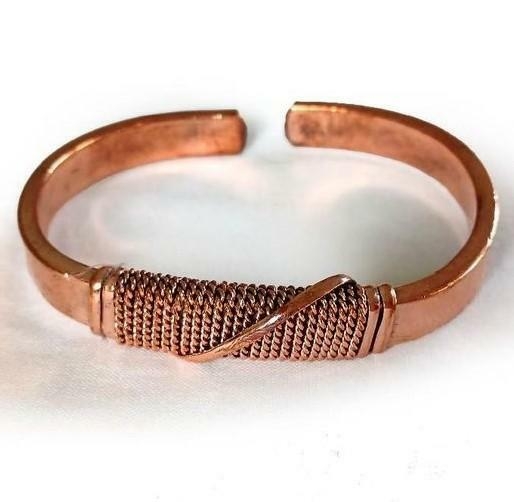
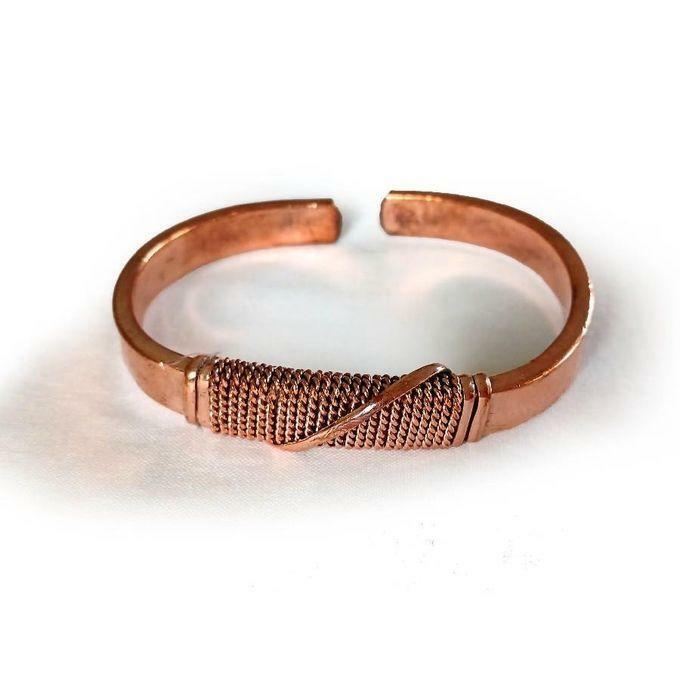
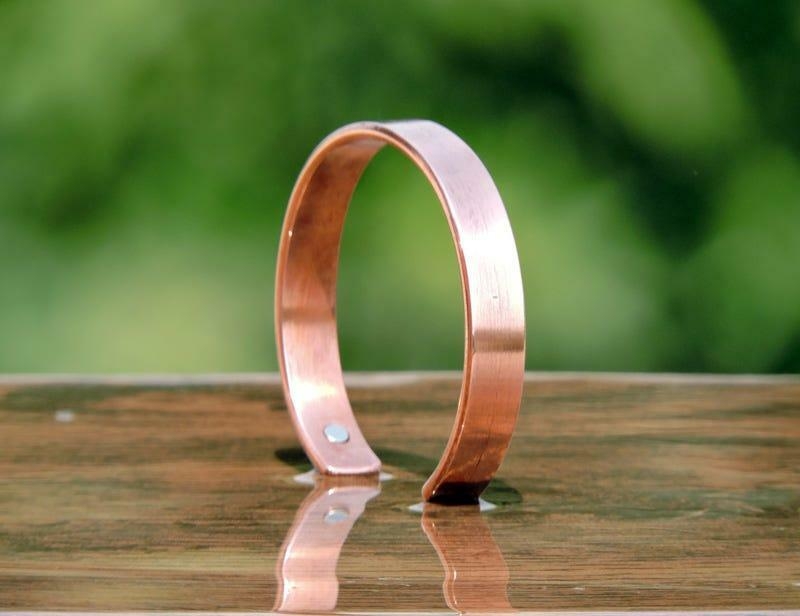
Purported Health Benefits
The belief in the healing properties of copper dates back to ancient civilizations, including the Egyptians and Greeks. Proponents claim the body absorbs tiny amounts of copper through the skin, which then provides various medicinal benefits.
Scientific and Medical View
Despite anecdotal reports and personal testimonies, scientific research does not support the health claims associated with wearing copper bracelets.
Spiritual and Aesthetic Reasons
Beyond health, many people wear copper bracelets for their metaphysical properties and unique appearance.
Your copper bracelet will rarely collect dirt or grime, and if it does it is easy to wipe down with a damp cloth, the same way you would any other mental object. That being said, copper is a unique substance in that it tends to oxidize very easily, and oftentimes one will confuse this copper oxide (also known as 'patina') for regular filth.
The best way to understand patina is to think of copper coins, like pennies, found in most currencies around the world. Dull looking coins are usually assumed to be incredibly dirty and undesirable, when in reality it’s usually just a layer of oxide that can be easily removed with proper care. Now, that’s not to say pennies aren’t dirty, but the dirt you need to worry about is likely in the form of bacteria and therefore invisible to the naked eye!
As a rule, make an effort to regularly polish your copper bracelet with a gentle cloth. If copper oxide begins to form on your bracelet, then use one of the following methods to strip it off:
Cut a lemon or a lime in half, and sprinkle salt on the open fruit. Rub the exposed, salty side all over the bracelet until the oxide appears to be scrubbed clean. Use the rough face of a kitchen sponge to further loosen any extra oxide. Rinse, and use beeswax as an extra layer of protection if so desired.
Use a shallow dish to drench your copper bracelet in a generous amount of white vinegar and salt. Rub the mix all over the bracelet, until all of the oxide has been dissolved away. Use a cloth to polish.
You can also bring vinegar and salt to a boil on a stove and drop the bracelet into it. The oxide will wash away after a few minutes.
This method works best for light oxidization. Simply rub store-bought ketchup all over the bracelet and let it sit for 15 minutes. Rub it off with a soft cloth, give it a rinse, and then use a clean cloth to polish.
Measure a cup of white vinegar and a tablespoon of salt into a bowl. Slowly add flour into the mix, stirring and watching as it turns to a thick paste. Coat the copper bracelet in this paste and leave it to sit for an hour. Use warm water to rinse it off, and a soft cloth to polish.
The above cleaning methods are all at home solutions to solving the problem of copper oxide. There are store-bought products on the market that can be used to do the job, but there really is nothing quite as satisfying as simply using a lemon to revive an old piece of jewelry.
As a further preventative method, regularly coating your copper bracelet with a thin layer of Vaseline can drastically reduce oxidization. Unfortunately, copper oxide occurs simply because of copper meeting air, so it’s very difficult to ever guarantee that it won’t happen.
Scientific and Medical View
Despite anecdotal reports and personal testimonies, scientific research does not support the health claims associated with wearing copper bracelets.
Lack of Evidence: Multiple robust, placebo-controlled studies, including a notable 2013 trial published in PLOS One, found no significant difference in pain, inflammation, or physical function between people wearing copper bracelets and those wearing a placebo.
Placebo Effect: Experts state that any perceived benefits are likely due to the placebo effect, where a person experiences relief because they believe the treatment is working. The natural fluctuation of chronic pain conditions like arthritis can also contribute to this perception.
Absorption Through Skin: While copper is an essential nutrient obtained through diet, there is no proof that therapeutically significant amounts are absorbed through the skin from a solid bracelet.
Medical Advice: Health organizations like the Arthritis Foundation emphasize that copper bracelets are not a substitute for conventional medical treatments, and delaying proper care can allow conditions like arthritis to worsen.

This product has no ratings yet.
/product/02/5579623/1.jpg?5553)