HomeHall sensor
Express

Frequently Asked Questions about Hall sensor

What should I look for when choosing a Hall sensor for a DIY electronics project?
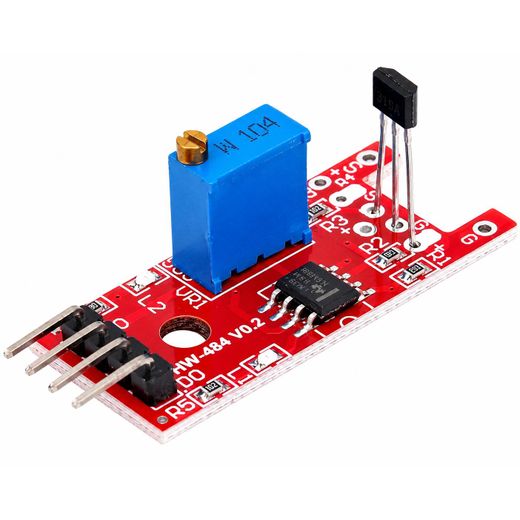
Begin with the basics: a Hall sensor module that uses Hall effect sensing with both analog and digital outputs gives you flexible reading options. The KY‑024 module provides a 4‑pin interface for easy microcontroller connection, an onboard potentiometer for adjustable sensitivity, and compatibility with popular platforms like Arduino, Raspberry Pi, and ESP32. Its compact, lightweight form is ideal for robotics, automation, and educational projects, where you need reliable magnetic detection for speed counting or rotational sensing.
Which attribute is most important for reliable sensing, and how does it affect projects?
Adjustable sensitivity via the onboard potentiometer is the most important attribute for reliable sensing. It lets you fine‑tune the detection threshold to match magnet strength and distance, reducing false triggers in environments with weak fields or ambient interference. The module also offers both analog and digital outputs, enabling simple thresholding or continuous monitoring in a project, whether you’re counting RPM, detecting proximate magnets, or enabling motor position sensing.
Usage scenario: who benefits most from these sensors, hobbyists or professionals?
Hobbyists and students benefit greatly due to the low cost, easy wiring, and compatibility with common microcontrollers. For robotics or automation enthusiasts, the KY‑024’s dual outputs and adjustable sensitivity support simple yet effective speed counting and proximity sensing. Professionals in education or rapid prototyping will appreciate the compact design and stable performance, which helps them prototype sensor‑driven control systems without complex signal conditioning.
Maintenance/compatibility: how do I wire and calibrate KY‑024 for consistent readings?
Wire the sensor to a microcontroller using the standard 4‑pin interface, connect VCC, GND, and the analog/digital outputs as per the guide, and then use the onboard potentiometer to adjust sensitivity. Calibration involves presenting magnets at varying distances until readings stabilize within your desired range. Ensure your microcontroller’s input pins are configured correctly and that you test with real magnets to verify compatibility across Arduino, Raspberry Pi, ESP32, and other DIY platforms.
What typical applications suit Hall sensors like this, and why?
Typical applications include speed counting, rotational sensing, motor detection, proximity switching, and magnetic field measurement. The Hall effect principle provides non‑contact sensing, which is ideal for measuring rotation speed without wear on moving parts. The KY‑024’s combination of analog and digital outputs makes it versatile for projects ranging from tiny robotics kits to larger automation demos, especially when you need a compact detector with adjustable sensitivity.
Are there any indicators of reliability I should consider when buying?
Yes. Look for a sensor described as stable and reliable in magnetic detection performance, with clear digital and analog outputs and broad compatibility with common microcontrollers. A compact, lightweight module reduces strain on mounting hardware, while an adjustable sensitivity control helps tailor performance to the magnet and application. The presence of a widely used brand name in the ecosystem and positive seller feedback can also signal dependable quality for educational or prototyping tasks.