 Sell on Jumia





 Filter

 Brand

Electrical components
(1460 products found)









-

-
 Previous Page
- 1
- 2
- 3
- 1
- /37
-
Next Page
-
 Filter

Frequently Asked Questions about Electrical components
How do I choose the right electrical component from this assortment?
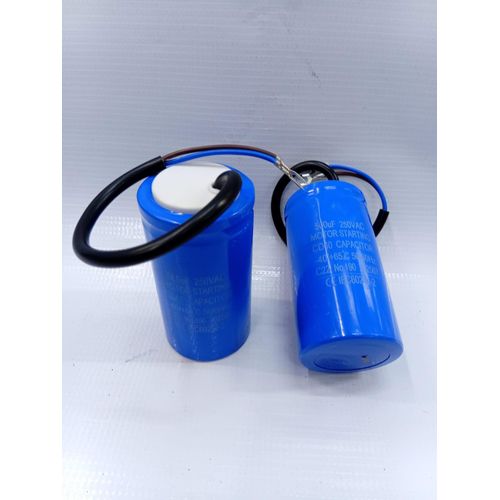
Begin by identifying the function you need: resistors for current limiting, capacitors for storing charge, switches and isolators for safe de-energization, or transducers for energy conversion. Then verify the rating and compatibility with your project’s voltage and type of circuitry. In this collection you’ll find a starter kit with passive components and resistors, isolator switches for safety, piezo transducers, and capacitors designed for motor applications, giving you a variety of foundational parts for learning and building.
What are the main types represented here and their typical uses?
The lineup spans resistors, passive components, switches, transducers, and capacitors. Resistors and fixed resistors manage current flow in circuits, while piezo transducers convert electrical signals into mechanical energy. Switch/isolators ensure circuits are safely de-energized during maintenance. Capacitors like the motor-start and motor-running types store and release energy to assist motors, making them essential for motor control and electrical projects.
What ratings should I check for capacitors and switches?
Look for voltage ratings and compatibility with your equipment. For example, motor-start capacitors in this set are rated for appropriate motor applications, and a motor-running capacitor is specified at 450VAC. Disconnectors offer switching capacity crucial for safety and de-energizing circuits. Matching these ratings to your device’s requirements helps ensure safe and effective operation.
Are these parts suitable for beginner projects?
Yes. Some items are explicitly designed for beginners, such as entry-level electronic component kits and basic interfaces, making it easier to learn circuit building. Beginner projects can start with simple resistors and switches, then progress to transducers and capacitors as understanding grows, enabling practical hands-on practice with foundational electronics concepts.
Do some parts require special tools or soldering?
Many components in this range are through-hole or designed for breadboard experimentation, making soldering optional for prototyping. The MOSFETs and capacitors are described as compatible with standard soldering and integration into circuit boards, while kits provide breadboards and tutorials to aid learning without advanced tools at first.
What should I know about voltage compatibility across these parts?
Voltage compatibility is essential: some items are suitable for high-voltage applications (for example, capacitors rated for motor use at 450VAC or higher), while others are designed for low-voltage experimentation. Always cross-check the product’s voltage rating and intended application to ensure safe operation within your project’s electrical requirements.
 back to top